How to Vote for Everything

The last 10 years (especially the last 653 days) in the United States have been about so much more than this.

But the Earth, the only planet we have to call home, is the core from which everything flows. The water, the air, the food, the materials we take for granted every single day… are all gifts of the highest magnitude, because they sustain and enrich life.

These things are not inexhaustible. And we are not entitled to them. Somewhere along the way, we gained a little intelligence as a species, and decided “This is all mine.” We decided that separating ourselves from the world made more sense than living with it, and working in it, and being a part of it.

The ocean, the rivers, the lakes, the soil, the atmosphere, the grass that’s grazed, the water we drink, the food our children eat: these things are deeply, inexorably connected. No amount of wishing or wordplay will change this fact. What we do matters, for good and for bad.

We are not entitled to the bounty of the Earth. Mother Nature owes you nothing.

And yet she has given us everything.

Our response has been “I want more.” We style ourselves the dominant species, and thus survey the domain of the planet. Our drive to survive is so strong, that coupled with our intelligence, it creates monsters of us both obvious and quiet.

Without

– temperance

– wisdom

– curiosity

– empathy

– tolerance

survival itself becomes a weapon. Anyone who has ever told you these are weaknesses is lying or delusional.

They are the greatest strengths of humanity. They are the pillars of integrity and progress.

Without these guardrails, our need to survive (and to understand everything in turn), makes us greedy almost beyond repair. Without these guardrails, we remain as children.

Weapons of war survive the sands of time far longer in our shared archeological record, because metalworking provided advantages in weaponry. But the artifacts of the home, of trade, of peace, of art, and of science are far more susceptible to decay. So what we see looking down at our feet, or with the help of a shovel, is a history dominated by conflict.

And yet every other clue in the entire collection, the big-picture history of our species, points to cooperation as the foundation of our success. Cooperation, not conflict, is what we should see when we look behind us.

Conflict is a choice. Cooperation is a ground state.

The voice of pure survival is powerful. It is as seductive as it is comforting. It convinces you that the easy way is indeed possible, and in fact preferable. It says “You need this. You deserve this. Keep it. Hide it. It’s yours.”

It is the voice that justifies the hoarding of wealth and resources while people suffer.

It justifies the destruction of land, forests, water, animals, and humans in the name of profit.

It justifies pollution, sickness, and disease for the sake of success and power.

It justifies averting your gaze from your persecuted neighbor.

It justifies abusing, belittling, and exploiting women.

It justifies destroying children in the name of righteousness.

It justifies the targeting, terrorizing, incarceration, and execution of anyone different enough to be noticeable.

It justifies turning the temple into a field of commerce and a nest of vipers.

It justifies the dismantling of everything good so that it can be replaced with everything holy.

It justifies borrowing from the future until you’re completely insolvent.

Giving in to that voice is where true weakness lies. Following this voice is a submission of your will to an instinctual drive that does not discriminate, nor celebrate, nor imagine. This voice does not know the difference between “doing good for people” and “doing right by people”.

Weakness is not saying “I care”. Weakness is saying “I only care about myself”.

Either everything is sacred, or nothing is. That’s the line I choose to draw. There is no possible universe in which my heart allows me to live a different way. Once you start arbitrarily marking things as holy, to the point of exclusion, you’ve already started down the path of destruction.

Either everything is sacred, or nothing is.

If you choose to draw a circle around a few things and call it “sacred”, then you’ve made your choice. It’s no different than extolling the virtues of your moral high ground by saying “I refuse to choose sides”. That’s still a choice. And in both cases, you’ve chosen yourself.

We need more people in the world who choose to care about something other than their own ego.

If you’re looking for the thing that needs boundaries, it’s tolerance. Tolerance, by definition, requires boundaries in order to remain “tolerance”. You cannot create an environment of peace by giving equal voice to hatred. We lost the plot on this one over the last decade.

“But what about me?” says the racial supremacist. Says the anti-woman, anti-child ideologue. Says the hateful religious. Says the hyper-capitalist as they burn everything to the ground. Says the political opportunist. Says the person who values situational peace at the expense of necessary boundaries. Says the citizen who refuses to let go of their personal anger.

“But what about me?” What about you? There is no room for you here. There never should have been. Don’t get me wrong, we’ll always struggle with these things. But they need to be shut out in the cold. It needs to be made clear, now more than ever:

Sacred: everything.

Tolerance: boundaries.

We also need to reject the reactionary gaslighting that arises in response to the efforts of justice, conservation, cooperation, equality, and progress. Calling those things weakness, and labeling those things hatred, and aligning those things with discrimination, is extremely cheap and basic propaganda. Be insulted that they were ever weaponized against you. We’ve already fought devastating wars over this. We have, in fact, seen this movie before.

Rights are not pie. More for them does not mean less for you.

When everyone wins, everyone wins. It is that simple. If you think everyone gaining the intrinsic respect of rights and the bounties of progress means you lose something, you’ve been lied to. And whoever’s doing the lying is, in some way, stealing from you. Guaranteed.

All humans deserve equal rights.

Humans are part of the Earth.

And while rights are not pie (limited or exhaustible), the body of the Earth is.

We stand at the crossroads of a future, one which I’m convinced rests upon the belief that either everything is sacred, or nothing is. We either destroy the body of the Earth over generations, and continue to allow ourselves the luxury of weakness, or we decide that leaving a better world to future generations is worth more than feeling comfortable and justified.

Everything else that matters flows from this.

Even before I could walk, both of my parents would tell me to “listen to that still, small voice inside you”. Some of you get the reference. But regardless of the path I’ve chosen to follow, I’ve never stopped listening.

I have a tendency to complicate things with words, to get hung up on concepts and ontology, to get too philosophical. Maybe even this piece is obfuscating my core point. In that case, here it is:

A vote for the Earth is a vote for everything.

It is possible for everyone to gain from this. In this approach, abundance becomes manifold. In this space, the only internal threats are imagined ones. And this does not sacrifice any necessary amount of defense or tactical reality.

As we’ve seen, it takes an enormous amount of effort to overcome the driving force of pure survival, distilled greed, and compounded hatred. And things are far from over.

But for everyone who kept telling others (and themselves) “keep fighting the good fight”, it’s nice to have the light shine down on you once in awhile, isn’t it?

Especially for those who aren’t here with us to witness it.

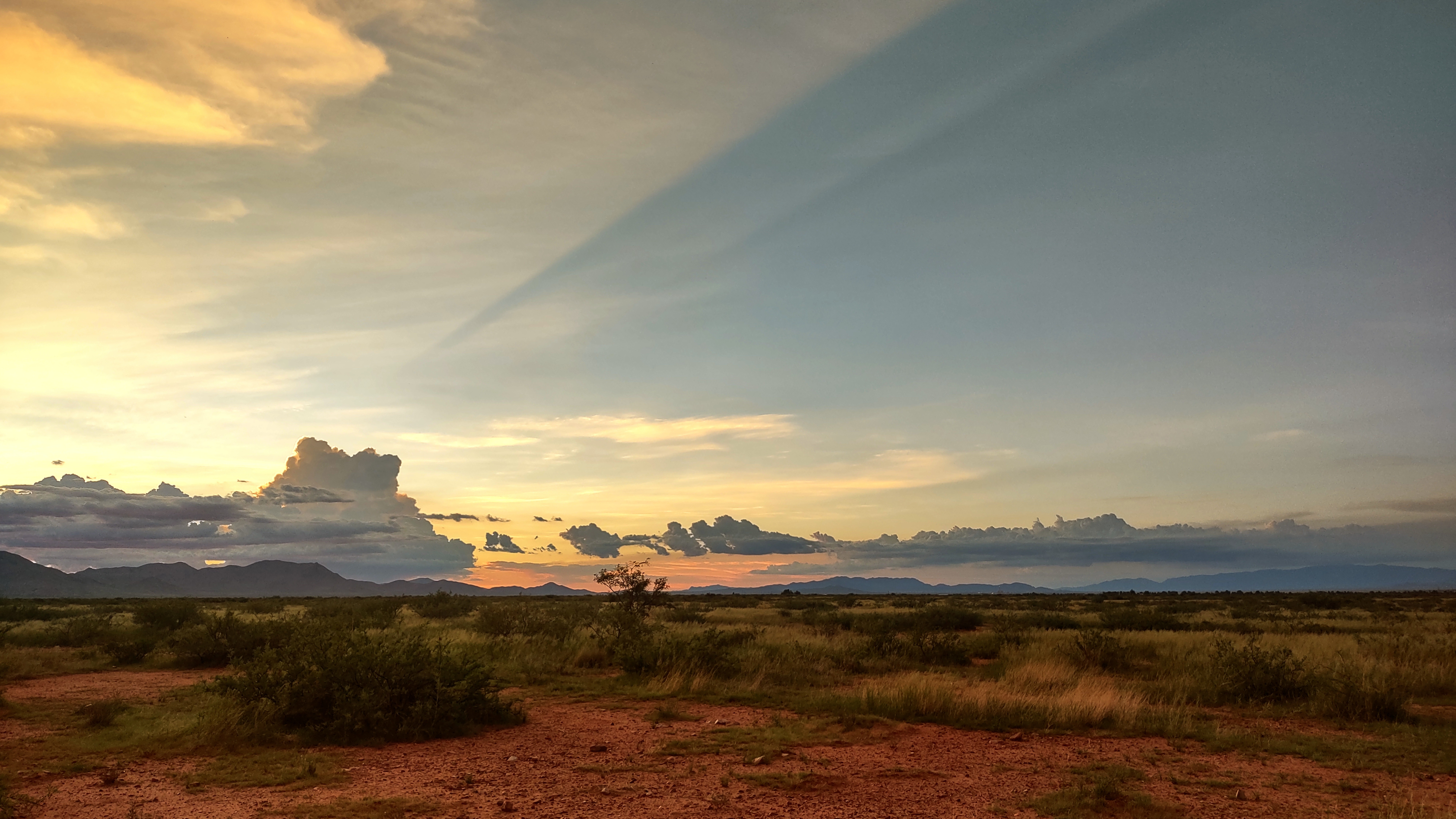
Keep listening to your small voice, and keep your eyes on the horizon. You will hear what matters, and you will see the same sun set and rise over all.

original post: https://www.facebook.com/share/p/18fTcLz4JB
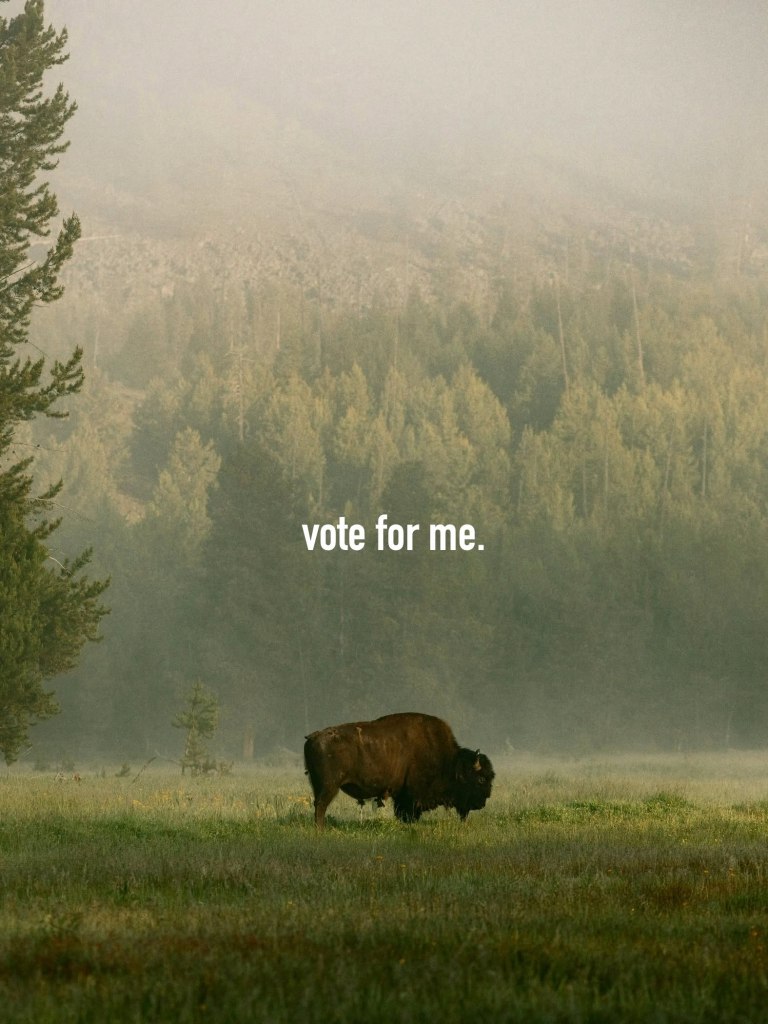
image credit: Tyler Wayne Glass | https://www.tylerwayneglass.com

Sorcery

When the veil splits apart,
and you come to me in dreams,
even on the coldest night,
it is not blood that surrounds you.

Not destruction or a blast radius,
no sharpened blades encircle,
nor heavy boughs of sorrow
drooping like the willow tree,

but the warm and simmering ghost
of the golden hour,
dripping through green leaves,
falling on hardwood floors,

and the silver whispers
of the night sky’s pale rays
cascading over tangled vines,
encircling your head like a crown.

I see you.
Your gaze flickers to mine for a moment,
enough to burn through me.

You are concentrating.
You are feeling.
You are conjuring from the deep.

A flame dances in the palm of your hand,
as you reprogram the backend of the universe,
and all I can see is the fire in your eyes.

I look at you now.
You still do this.

You spark.
You weave.
You cultivate.
You snap and ignite.

Your embers pain mortal flesh.
Your song is molten metal.
Your heat is crimson emerald.
Your dance is black and gold.

I have watched you make wild things flourish.
I have seen what you incinerate.

You eat the light of the sun.
You drink the light of the moon.

Your power blooms.
It dies.
It grows and blooms again.

You smile in the face of winter.
Your laughter is lush and green.

No chain of frost nor bond of ice
would dare to tie you down.

You are undiminished,
even in these dangerous lands.

Do you understand?

Your magic has grown.

All I can see is the fire in your eyes.

Devotion

I want to tell you something.

A memory surfaced this morning,
coming in through the western window,
as the sunlight that binds us
slowly consumed
the moonlight that hides us.

A long time ago,
I was out in the pasture,
standing in the fading summer light,
herd of horses far afield.

The anvil cloud in full electric bloom,
singing deep the distant vibrations—
the ones you can 

feel 

in your chest.

You know what I mean.

That night the air was still thick and hot
over the high country.

The sun sinking
like a sacred oath.

The charge of potential floating
over the tall grass, the cactus, 
the yucca and sage,

every creature 
above the ground, under the sky.
All of us together in the golden hour.

And the storm moved in,
and I did not blink.

Near a lone piece of darkened rock,
I saw lightning


          strike


                    twice.

song of the multitude

she is multitude

she contains ecosystems
she is immense
filled from edge to edge with wilderness

she bathes in nightfall
and walks with death

she heals the forgotten and the outcast
moves in silence through shadow

sleeps in a mantle of tranquility

and like a leaf unfurling
bursts from joy in the light of dawn

she weaves her web on the strongest boughs

she watches from the high ground
of the mountain
and listens in the low places
of the valley

she can see the small things
and hear the small voices
of the earth

her hawk-sight soars far through the air

her song is water flowing over rock

she is guided by the stars

she is interlinked

her eye is uncovered

she is the dry country drinking the monsoon rain

her mind is the undersoil network electric
of the ancient forest
from mycorrhizae to heartwood
where the hare darts through the unrolling ferns

her heart is the cumulonimbus
towering anvil thunderstorm
lightning arcing into the dust and the dirt
where the coyote runs over the darkening desert

her soul is the deep of the estuary
where the ocean welcomes the river
after its long journey
where the salmon come home

once in every circuit
of our planet
around our sun

in this furthest arm of our galaxy
spattered among the deep space countless
where gravity bows before the unknown

she is multitude

Western Window

I wanted to tell you
that I just watched the sunset.

The last 10 degrees sunk below the mountains
in real-time.

We say “I watched the sun set,”
when really we mean
“I watched the world turn.”

Our feet are rooted to the ground;
our eyes live on the horizon.

A lingering blossom of auburn
and dripping red
and yellow and pink
and pillowed blood golden sky now fades
up
into the coming blue hour.

Only in these slices of time
do I feel allowed
to be—

perhaps because
I’m watching
the sun set
and not the world turn.

The earth revolves in constancy;
the sun sets in a moment.

Yes, this also means
I should
remember
to hold on
to such a feeling.

Yes.

So we persist in the knowledge
of the fact
that we have different words
for “life”
and “death”.

Life revolves in constancy;
death arrives in a moment.

We inhale and exhale,
rooted to the revolution,
trees of bone and dead stars,
veins of ocean water,
skin of salt and the electric,
eyes open
/
only
/
in slices
/
of time
/
that permit us
/
to break with gravity,
or find a safe orbit
in one another.

Twilight fades into the blue,
deep now in the coming dark.

No.

Not darkness. Look.
(I know you would
if you were here.)

Worlds
upon worlds
upon worlds,

spattered,
innumerable,
dancing with us through the void.

Southeast Arizona Desert, Dragoon Mountains

Distance

Sometimes, there’s a place where the grass and the sage, pine and cottonwood, rocks and scrub and a cactus or two — maybe piñon and mesquite and yucca and so forth — they all get together and make up a kind of existence that’s mildly intoxicating.

Places like this are important if you’re extra-sober to begin with.
Say if, for example, you happen to be born that way.

Little breezes ruffle and shift the scents around.
Sometimes the wind really kicks up and does its best to rearrange your day.

Mostly, these areas aren’t burdened with an overabundance of trees or houses.
You can see the horizon. You can breathe in deep and feel your mind flatten out.
Memory and time stop fighting each other. Your worst enemy might be a fence or two.

I don’t generally have anything against concentrations of trees or houses — or people, for that matter — but I need to be out in the wide angle, out in the open kind of wild.

You can see the storms coming in of an evening.
Hear the wind searching. Feel the thunder unroll, look at the lightning crack.
You can see the sun breaking in yellow through the mist or dying down red in the clouds, and you can watch it all coming in and get yourself together.

You can give yourself to it. It’s like getting ready for church or mass.
Like a wedding or a funeral.

Folks tend to be fearful of a skeleton.
Something about bone laid out bare to the weather, I’d wager.
Out there, you get reminded you’ve got one inside you. You were born with it.

Things in the land and things within us consummate and live and die all the time.
Out there you can feel it, know it for what it is — a sort of honesty uncontrived.

You can see it all coming, and see it all going.

Cooking with the Stars

Hold your thumb up to the sun.

Count to 10.

Thousands upon thousands of subatomic particles known as “neutrinos” just passed through your body.

You may have heard of the lab, deep beneath the head of the Homestake Gold Mine in South Dakota, that’s dedicated to the study of these particles – and, in turn, to a small part of the fathomless, underlying mystery of the cosmos.

Like many observable quandaries in the realm of quantum mechanics, neutrinos are produced during an event of massive energy (notably, in this case, the sustained fusion reaction of our sun). Within our sun, the prime atomic building block of the universe – hydrogen – is constantly being fused with itself into helium.

This marriage gives birth to a chain reaction of cosmotic creation, such as the transfer of some of this matter into energy, and the building of new and heavier elements.

Now, as lovely as neutrinos are (for example, they exist in three separate states at the same time), it’s mainly the Sun’s massive release of energy we’re concerned with – especially when it comes to cooking.

I promise there’s a point to all this.

Think about the food chain. Consider it. Look at the hamburger, or the salad, or the chips on your plate right now. Imagine what had to transpire for this meal to even exist. Go beyond the supermarket. Beyond the farmer. Beyond the animal. Beyond the plant. Even beyond the soil, or the sea.

No matter what the species, no matter who or what you are – human, cow, bird, fish, tree, grass – it is a vastly complex, and yet ultimately simple picture.

Gravity and energy, and the state of the very fabric of spacetime after the birth of the universe itself, all conspire to, in turn, give birth to stars… which, one day, will die themselves. As all things must.

But in their lives, which span eons, the potential for the creation and sustenance of life itself is undeniably huge and powerful. 

And beyond the mere act of this creation, we as humans had to experiment for many generations in order to elevate the basic necessities of fat, protein, salt, sugar, minerals and trace elements… into something divine.

Meat over an open flame is survival. Salt from the ocean, ground beads of peppercorn, and dried rosemary make it something more.

Consider as well the miracle of a bowl of non-poisonous plants, drizzled with oil pressed from tiny, pungent fruits and the leftovers of fermented grapes (itself a product of energy conversion).

There is a hint of something here – something beyond the realm of the observable. 

A great mystery presents itself in cooking, in the willful and creative endeavor of harvesting various iterations of stored energy from our sun, in the heating and reducing and chemical experimentation and mastery that can generate a simple plate – one that can make almost anything alright. Better still, this is mastery anyone can attain.

On this “pale blue dot”, moving through the inconceivable vastness of space, how strange – and how wonderful – that something as simple as preparing a meal can hold within it the mysteries of the subatomic, the competition for the energy of a slowly dying star, the subliminal experience of taste, and the gifts & lessons of generosity… all at once.

The Scent of Forgotten Things

Note: a version of this article previously appeared in the Winter 2019 issue of Mélange Magazine.

The storm-dampened scents of Dauphine Street gave way to something old and familiar as I opened the front door of the used bookstore.

Here in the heart of New Orleans, as in all places I visit, I’d inevitably found myself seeking out such places. Without a particular itinerary, and driven by multiple cups of chicory coffee, I found myself somewhat regrettably using Google Maps to suss out the oldest and most promising of these shops. 

The smell embraced me immediately as I entered. If you’ve ever been around old books for any length of time, you know what I speak of. It’s somewhere between the dust and age of old houses and a bottle of vanilla in a woodshed. In these places, worthy treasures are never guaranteed; the calming scent of nostalgia certainly is. 

Nostalgia, in this case, being the simple chemical reactions that physically occur in books as they age. As time passes, the wood pulp in a book’s pages breaks down into various organic compounds. Lignin, which makes up a generous portion of the pulp, produces acids, which in turn dismantle the pages’ cellulose. This process produces vanillin, benzenes, and hexanols, contributing vanilla-, almond-, and floral- and organic-like smells to the book itself.

This is partially what makes up what some lovingly refer to as biblichor, or “the smell of old books”. By comparison, the recently rained-on street mentioned earlier was imbued with petrichor, or “the smell after rain”. Ichor, the Greeks said, is the fluid that flows in the veins of the gods.

Given that it’s generally the hardcover books made between the 1830s and 1980s that used the pulping and adhesive processes necessary to produce what we consider biblichor, you’ll find less and less of it in volumes printed after the late 50s (when the paperback craze started to take off). Only in recent history have we begun to use materials and processes that deny the production of the scent of nostalgia.

Scent, as we know, is the most powerful accessor of memory- but also of imagined memory, of that nostalgia. You can feel it, in these old shops and old locales. Your mind, after skipping through your own memories, feels as though it’s touching the edges of others- of memories not your own.

There’s something nearly indefinable about old bookshops, something that draws many of us in, I imagine, without a specific purpose in mind. It goes beyond mere charm. This must be one of the reasons we seek them out, for what in the modern age affords us the rare luxury of true purposelessness? 

That lovely lack of purpose, I suppose, lands right alongside the lure of the historical- history that can, in these places, end up being far more personal than a tour or museum. When we’re led by a guide (or by ourselves) to tours or museums, it’s with the purpose of encountering something enshrined- something important. 

When we find ourselves wandering into a used bookstore, antique store, or the like, it’s not only the apposite lack of purpose that entices us, but the other side of the historical coin- things forgotten or discarded. Things left behind. The unimportant. While monuments widen our gaze within past ages, the trinkets and relics of the individuals from those ages do far more to transport us, and in turn, to ground us.

Among the wayward, proliferate stacks of the old books I navigated around in Dauphine Street, I uncovered a 1961 printing of the Lebanese poet Kahlil Gibran’s Sand and Foam, nestled in with several of his other works. One of Gibran’s trademark small, unassuming tributes to the meaning of language, art, time, and love, I found inside the cover that this particular volume had been gifted from one college student to another:

December 1962
Merry Christmas Brenda,
Gibran says that the obvious is that which is never seen until someone expresses it simply.
I hope these two books will help you see the obvious more clearly, as they have me.
Best Wishes as Always,
Gaye

On the following page, Brenda has marked herself as the owner of the book, along with an identifier of her residence at the time: Dorman Hall.

A bit of research shows that “Dorman Hall” was a dormitory at FSU in Tallahassee, built in 1959 after the Florida State College for Women converted to a coed institution in 1947. Researching the modern layout of FSU reveals that the original Dorman Hall was demolished in 2015; but a newer version has been built in its place.

I wonder if Brenda’s still around- happy, retired, perhaps writing a book of her own in her mid-70s. I wonder if she and Gaye remained friends. I wonder if she remembers this book, and whatever meaning it held for her.

Old bookstores make you wonder a lot of things, the least of which involve yourself and your place in the world.

Of course, with time being the great equalizer, this means that you’re as likely to find hidden treasures in one old shop as in any other. This would be proven to me somewhat humorously two years later, when someone pointed me to an even larger stack of old Kahlil Gibran volumes at a library sale in Hot Springs, South Dakota.

The territory of nostalgia is a mostly level playing field, no matter where you might find yourself. Whether it’s milk and coffee, old stone and fresh rain, or old wood and older books… 

…all you have to do is follow your nose. 

And leave your sense of purpose at home.

No Land Beyond: Preludes III

New Mexico

2035

Havoc sat next to Cordell on the edge of the high hill. The whisperings of a storm gathered in the distance; one that would miss them this far beyond the mountains. It was a dry season this far south on the plateau; only patches of trees thrived near groundwater in between the bromegrass and prickly pear and scattered chaparral. The stars and the arm of the galaxy were ripe and apparent.

Remy had hunched down a short distance off, building a fire and cursing to herself.

The dog broke the silence.

“Woman angry.”

Cordell chewed on some leaves from his pouch as he checked his ammunition. “Yeah. Wearing these… these things,” he said, nudging his Rig, “hurts. Sometimes.”

“Woman not care pain.”

Cordell chuckled. “Seems like you know what’s up.”

Havoc cocked his head. “Up? No. Sense only.”

“Yeah, well…” Cordell rocked back and sat on the ground. “We just had to deal with a… you say ‘dark thing’? Not easy to… uh, understand. You follow?”

“Many of…” Havoc snorted “… many things not follow.”

“But you sense things better than me.”

Havoc glanced at Remy’s fire. “Anger. Old.”

Cordell plucked a blade of grass. “Might not be wrong about that.”

The wind moved in little eddies over the waves of the field.

“Human-Prime. You all worry. Anger. Why?”

Cordell looked at Havoc. “Huh?”

“Odd. Other dog, sometimes hurting, beaten, have bad. Many times. I see this. But human, bigger thinking. Build. Command. Rule. Try to sense…” he shook his head “…hard to. Take pain, carry around, carry on back. You. Her. Why?”

Cordell sighed. “I don’t know. I really don’t have a good answer, boy.”

“You worry of before? Or later?”

“Maybe both? Jesus, I don’t know. Bigger thinking isn’t all it’s… isn’t good all the time, Havoc.”

“You worry death?”

Cordell’s gaze locked onto Havoc. Havoc continued staring at the distant storm, smelling the air.

“You don’t?”

“Not want to die. Same. But worse for you. Much why.”

Cordell sighed. “This is way too complicated… like… too much to explain. To tell. Too big… thinking? You follow?”

Havoc turned his head to meet Cordell’s. “Cordell, Human-Prime. Think. Me. I have… thing? Inside. Inside-rain? Wind… moving-on?”

Remy swore in triumph as the fire grew.

Cordell’s eyes narrowed. “What are you saying?”

Havoc sighed and snorted. “Inside. Inside me. Not-touch. No dying.”

“Are you… what…” Cordell turned towards Havoc “…are you asking if you have a soul?”

“Not sure. I die.” Havoc cocked his head again. “Then what? Humans speak worry. Odd.”

Miles away, the low thunder rumbled on.

“Havoc… there’s… I don’t even know the answer to that. I’m sorry. Look… I…”

“OK. Not sure?”

“Well, no. Does it matter? I think… whatever the case…” Cordell looked back at the storm. “… you’re like me.”

Havoc’s tail started wagging. “Yes?”

“Humans are animals too. Remember that. Just… bigger thinking.”

Havoc grinned and panted. “Too big!”

“Ha! Pretty much.”

“Not worry then?”

“Shit. I wouldn’t.”

“OK good.” Havoc looked towards Remy’s fire. She watched now as the storm skirted the mountains. “Work to do. Die later.”