Your worth as a member of the human species and a resident of Earth is not defined by how much money you make, what possessions you own, your looks, your social media, or even by what you achieve.
It is defined by the shape you leave behind in the world. It is defined by what you were able to contribute to the sphere of experience in your life.
Some people earn monuments and accolades.
Some people add to the pool of harmless joy in the world.
Some people create a fire of goodness and courage that burns away the darkness.
Some people leave an irreplaceable void, sometimes within nothing more than a single other person.
And some people toil under the light of the sun or the light of the moon, nothing but nature bearing silent witness to their work.
Ultimately, whatever we do is meaningless. That is the way of the universe. Yet we must do it nonetheless. You matter here and now.
You did not choose to exist, but you must choose what shape you leave behind in the world. You must. And in deciding not to choose, you still make a choice.
For every human that has ever existed or will ever exist, this is everyone’s same charge, same vocation, same calling. This is the one thing we all share.
Reject it at your own peril, because in doing so you reject not only your fellow people, but your own humanity as well. You reject life itself.
We are islands to each other, yet unceasingly bound together.
What fires are kindled in your mind? What waters flow in the deep and secret places of your heart? What shape will you create?
As a human, you have within you the gift of conscious creation. It is what you live and what you pass down and what you leave behind.
I speak to all people. I speak to you. The power of this calling is in your own hands. Choose.
Sometimes, there’s a place where the grass and the sage, pine and cottonwood, rocks and scrub and a cactus or two — maybe piñon and mesquite and yucca and so forth — they all get together and make up a kind of existence that’s mildly intoxicating.
Places like this are important if you’re extra-sober to begin with. Say if, for example, you happen to be born that way.
Little breezes ruffle and shift the scents around. Sometimes the wind really kicks up and does its best to rearrange your day.
Mostly, these areas aren’t burdened with an overabundance of trees or houses. You can see the horizon. You can breathe in deep and feel your mind flatten out. Memory and time stop fighting each other. Your worst enemy might be a fence or two.
I don’t generally have anything against concentrations of trees or houses — or people, for that matter — but I need to be out in the wide angle, out in the open kind of wild.
You can see the storms coming in of an evening. Hear the wind searching. Feel the thunder unroll, look at the lightning crack. You can see the sun breaking in yellow through the mist or dying down red in the clouds, and you can watch it all coming in and get yourself together.
You can give yourself to it. It’s like getting ready for church or mass. Like a wedding or a funeral.
Folks tend to be fearful of a skeleton. Something about bone laid out bare to the weather, I’d wager. Out there, you get reminded you’ve got one inside you. You were born with it.
Things in the land and things within us consummate and live and die all the time. Out there you can feel it, know it for what it is — a sort of honesty uncontrived.
You know how headlights, when you’re near a desert highway, pan across material like a searchlight, casting incoherent shadows past whatever they happen to catch –
sage, cactus green and praying to the rain, hitchhiker’s drugstore cowpuncher boots, corrugated lean-to slumped up against the wire?
Well that isn’t happening just yet.
Coyote isn’t on the wander right now.
The sun is still walking, heading west, knowing exactly where to go.
Daylight melts over dust and hardpan, yellow, umber, ochre, neon hot pink.
Memory melts like daylight.
Those clouds, see. That’s what I mean. Cirro… cumulo… cirronimbulus?
It rises, dark and thick in the gloaming. It drinks the melted daylight.
A rush of cool air. Scattering of sand. Silent stab of arced lightning. One million volts in a terawatt cycle.
Thunderstorms drink memory like daylight. They amplify. They make ready for the night.
You should come tell me what you think.
Silence. Rumbling over the distance of the earth.
Silence.
Cumulonimbus. That’s it.
You’d have gotten that quicker.
Silence.
Scent of the dry before the wet.
Burning gold at the end of the sunwalk underneath the dark tower.
There. Coyote’s on the wander. Hungry.
The semi-truck moves past and headlights cast no shadows beyond a ghost.
Note: a version of this article previously appeared in the Winter 2019 issue of Mélange Magazine.
The storm-dampened scents of Dauphine Street gave way to something old and familiar as I opened the front door of the used bookstore.
Here in the heart of New Orleans, as in all places I visit, I’d inevitably found myself seeking out such places. Without a particular itinerary, and driven by multiple cups of chicory coffee, I found myself somewhat regrettably using Google Maps to suss out the oldest and most promising of these shops.
The smell embraced me immediately as I entered. If you’ve ever been around old books for any length of time, you know what I speak of. It’s somewhere between the dust and age of old houses and a bottle of vanilla in a woodshed. In these places, worthy treasures are never guaranteed; the calming scent of nostalgia certainly is.
Nostalgia, in this case, being the simple chemical reactions that physically occur in books as they age. As time passes, the wood pulp in a book’s pages breaks down into various organic compounds. Lignin, which makes up a generous portion of the pulp, produces acids, which in turn dismantle the pages’ cellulose. This process produces vanillin, benzenes, and hexanols, contributing vanilla-, almond-, and floral- and organic-like smells to the book itself.
This is partially what makes up what some lovingly refer to as biblichor, or “the smell of old books”. By comparison, the recently rained-on street mentioned earlier was imbued with petrichor, or “the smell after rain”. Ichor, the Greeks said, is the fluid that flows in the veins of the gods.
Given that it’s generally the hardcover books made between the 1830s and 1980s that used the pulping and adhesive processes necessary to produce what we consider biblichor, you’ll find less and less of it in volumes printed after the late 50s (when the paperback craze started to take off). Only in recent history have we begun to use materials and processes that deny the production of the scent of nostalgia.
Scent, as we know, is the most powerful accessor of memory- but also of imagined memory, of that nostalgia. You can feel it, in these old shops and old locales. Your mind, after skipping through your own memories, feels as though it’s touching the edges of others- of memories not your own.
There’s something nearly indefinable about old bookshops, something that draws many of us in, I imagine, without a specific purpose in mind. It goes beyond mere charm. This must be one of the reasons we seek them out, for what in the modern age affords us the rare luxury of true purposelessness?
That lovely lack of purpose, I suppose, lands right alongside the lure of the historical- history that can, in these places, end up being far more personal than a tour or museum. When we’re led by a guide (or by ourselves) to tours or museums, it’s with the purpose of encountering something enshrined- something important.
When we find ourselves wandering into a used bookstore, antique store, or the like, it’s not only the apposite lack of purpose that entices us, but the other side of the historical coin- things forgotten or discarded. Things left behind. The unimportant. While monuments widen our gaze within past ages, the trinkets and relics of the individuals from those ages do far more to transport us, and in turn, to ground us.
Among the wayward, proliferate stacks of the old books I navigated around in Dauphine Street, I uncovered a 1961 printing of the Lebanese poet Kahlil Gibran’s Sand and Foam, nestled in with several of his other works. One of Gibran’s trademark small, unassuming tributes to the meaning of language, art, time, and love, I found inside the cover that this particular volume had been gifted from one college student to another:
December 1962 Merry Christmas Brenda, Gibran says that the obvious is that which is never seen until someone expresses it simply. I hope these two books will help you see the obvious more clearly, as they have me. Best Wishes as Always, Gaye
On the following page, Brenda has marked herself as the owner of the book, along with an identifier of her residence at the time: Dorman Hall.
A bit of research shows that “Dorman Hall” was a dormitory at FSU in Tallahassee, built in 1959 after the Florida State College for Women converted to a coed institution in 1947. Researching the modern layout of FSU reveals that the original Dorman Hall was demolished in 2015; but a newer version has been built in its place.
I wonder if Brenda’s still around- happy, retired, perhaps writing a book of her own in her mid-70s. I wonder if she and Gaye remained friends. I wonder if she remembers this book, and whatever meaning it held for her.
Old bookstores make you wonder a lot of things, the least of which involve yourself and your place in the world.
Of course, with time being the great equalizer, this means that you’re as likely to find hidden treasures in one old shop as in any other. This would be proven to me somewhat humorously two years later, when someone pointed me to an even larger stack of old Kahlil Gibran volumes at a library sale in Hot Springs, South Dakota.
The territory of nostalgia is a mostly level playing field, no matter where you might find yourself. Whether it’s milk and coffee, old stone and fresh rain, or old wood and older books…
If you’re reading this,
then please,
sit
and rest awhile.
Before entering,
be aware that
in spite of
[__________]
you’re actually
a very good individual,
regardless of
[__________]
you are forgiven
and are loved by numerous people,
and that even
[__________]
will not defeat you;
though it will try.
If anyone or anything tries to
[__________]
you, or
[__________]
for you,
recall the following:
– you are forged from stars
– you are made from oceans
– you are composed from music.
If you ever get lost,
refer to your map;
in time you will attain
[__________]
and
[__________].
So sit,
and rest awhile-
ye have come already so far
and into the dark beyond
ye must now go.
under the naked lights,
in the depths of the dark,
awkwardly, utterly, ridiculously,
or as smooth as you are
(or think you are);
after work,
on vacation,
on pavement,
on grass,
on sand,
on water, if you’re that good;
dance alone,
or close with another;
whether free, flowing in the air,
or guilty and perhaps weighed-down…
dance with no alibi.
There are little things
in the rooms of wood and brass and string and spotlight,
in between the rock and the roll and the jazz and the jive;
little things with no price-tag
that hammer together the house of the soul.
Did you know
you’ll most likely attend an equal number
of weddings and funerals?
Yes, you may have to tidy up afterwards…
but dance in the kitchen, for heaven’s sake!
What exactly do you think you are?
Friends drove out beyond the light pollution
to witness this miracle-
out to where I came from,
to where my heart
lies beating in the wilderness
where it was forged.
I did not go,
and I have no answers for their questions.
This pen feels like a neutron star.
My soul has flown south for awhile.
That heart, out in the mountains, seems faint-
so faint from here. I strain to hear it.
I wander to the edge
of these suburbs at midnight.
I have no answers for their questions.
The distant voice of the highway
hums in the dark.
I cannot see the aurora, but what did I expect?
A thunderstorm is gathering, though-
quickly, insistently, intently
to the west;
cutting between the solar wind
and the city lights.
It is silent save for crickets
and I force this pen to move,
because I have to.
I have to.
A scent of summer flowers and water cleansing
pulses
nearer.
I force this pen to move
and I have no answers for their questions.
I cannot see the stars,
but they are where they are.
I cannot see the aurora,
but it dances on the face of the earth.
Rumbling echoes fading in the dark.
Electric arclight stabs and spits and forks
staccato into the cloudwall rising.
I strain my ears to listen.
I breathe.
I force my pen to move.
Heavy it may be;
but how else-
how else to hear your heart beat,
to hear you breathe,
somewhere out there,
under a storm of your own
(and, perhaps, a solar wind)?
How else
to hear my own heart,
softly,
singing in the mountains?
A stray dog stops for a moment,
at the edge of these suburbs,
in the rumble-echo,
in the rising summer wind;
we regard each the other in silence.
Finding no questions to ask me,
he resumes his journey without looking back.
through the rainfall,
the sunpierce,
the pine and spruce;
off the trail
of the acorn and ash,
of the prairie lily,
of light and water dancing
on needles and leaves;
past the hidden spring,
yawning cavern,
past limestone spires
and granite punctured
up from the heart of the earth;
in the forest and veldt
of the snake and the lark,
and the ram and the elk.
Your lungs are thirsty,
your heart, hungry,
your mind, tired- no?
And so we pass
into the land of the gods
of life and death.
But what else to be said?
What else,
as we tread perdition
through our doctrine of the night,
seeking a horizon reckoning?
What verdict given?
Shall I say,
“hold your sins & dreams
as you would your breath,
hold them now
until the coming dawn!”
?
No.
It is all ashen
and ground to dust.
Even if you cannot see
that the flame
I carry in my heart
could burn this place clear,
I still must lay it
before this living altar.
Listen.
Birds are singing in the thicket.
There is more music,
deeper in,
deeper still.
There hums a resonation.
What else, then?
What else to offer beyond this-
this sad
and staggering presumption
that I can somehow relay
this sanctification
to you
in words,
as though I have the skill,
and the right?
For I am no priest
and this place
has no need of one.
Here then-
let me lay down a permanence
for you,
and in full artistic grace,
describe instead
the peace
and eternity of this place:
(the song my mother taught me)
__________________________________
Yea, though I walk
through the valley
of the shadow of Death,
and you lament your simple self,
and shed tears in your unadornment-
wait,
for I too have cursed my own shadow.
So let us instead consider
things that carve and pierce,
let us feel the ground
upon which we stand,
for you only know the walking dead
by their tranquility,
and the truly content
by their graves.
Speak to me your nightprayers.
And watch.
We will learn of knots
and grindstones,
of prows and lathes,
of ecstasy, of aurescence,
of momentum.
Let me then become
the bride of the earth,
and the groom of ships
that plow the rising waves;
let me be as one
who stalks and slays fear,
who preys upon the darkness,
who bathes in the falconfall
coup de grace of our prisons,
who devours
the terror in midnight
that chews and rends and swallows
your soul.
Let me sit then at the table
with your demons-
see how I’ve prepared a place
for them.
Now,
pay attention,
for the night is flayed open,
and the maw widens in hunger.
Can you learn to tack into the wind?
Can you sail into the storm’s embrace?
Can you carve the roil,
and bring your sails unfurled,
riding this deathsong
to strike through thunder’s inertia?
This is the only way I know
to cut off the black hand
that holds your heart,
for I can see your song;
it carries out
past the edge of lightning
sunset into glory.
My dear,
your heart is a spear,
and a compass-needle;
your soul is a sailor,
young and bold,
come to spit in the Devil’s eye;
you are Incarnate,
you are Destiny.
I have offered up my lamentations
out of the dust of Eden
and painted them into the night.
I have trodden stars underfoot
and crushed them
into the wine of singularities.
(so my younger self told me in a dream,
reaching forward in the temporal
as I now enter the embrace of the world
and age into my slavery)
I’d pay good money to hear what yours told you.
Shall we build a fire then, in this desolation,
and brand me with the aspect of shadow?
How shall we brand you?
If Pride were ground into powder,
I suspect it could then be an anointing
upon this corruption;
perhaps even an atonement-
simple enough, yes?
Enough.
Show me then-
come, show me,
while there is still some serenity;
let us examine your engines of the dark
and the nightmare-fuel within
(are you watching closely?
energy equals matter times the speed of light squared).
Drift you now to the far shores,
sleep, and dream,
drift with your own permission-
for a song of this magnitude radiant
shall fly only to constellations;
was meant only for the season of sowing.
Do you not see how alive you are?
And do we have an according then, you & I?
For as I see all hands open
in these songs of light and dark,
and music woven out of silence cleansed
in the cloudwalk ascendant,
purified in the cosmotic night,
washed in the blood of the earth;
so do I see you dare to direct your gaze
up.
Now
take my lantern
and I’ll hold your hymns-
say it’s a good trade.
(it’s a good trade)
Behold then:
the field opening verdant in its laughter,
bathed in blossomscent,
how even the black dirt and red clay
sing under the sun
in their rushing to meet the mountains;
for winter will come again,
and still all will sing, still all will sing.
Come,
for the river is deep, and wide;
the water clear, and cool.
I tell you my grace and yours was bartered between us
in these bending waves of wildwheat.
Have you forgotten?
This is an accord, in fact,
with the song aureate in all things.
I know you can hear it.
The dark washes off so easily,
so easily, my love,
so easily.
There was an old father in the desert,
a long time ago,
(have you heard this one?)
who stretched his hands toward heaven,
and told his disciple
as his fingers turned to dancing fire,
“Well?” she asked, green eyes smiling under a mass of white hair. “Do you want the story… or the truth?”
The boy blinked. He hadn’t prepared for anything… profound. Most of the time, an adult (even a great-grandparent) had sat him down with the notion of “Alright now, listen to this and GO TO SLEEP.” He knew, for instance, that B always came after A; and that the hero was generally allowed to kill or break whatever got in his way, and that the girl was always waiting for him since she had nothing better to do.
But this? The story? The truth? He tried to concentrate as he nursed his glass of milk.
She waited.
“Um… which one is more exciting?”
She pursed her lips and sucked at her teeth for a few seconds.
“Well now… that all depends on what excites you. There is Dark in the story. We revel in it. The Dark is engulfing, and comforting. It fills in the cracks and holes of life. When we sink into darkness, in sleep, our minds create and live in stories.
Yet there is Light in the truth. It illuminates and cleanses, and sometimes is uncomfortable. When we are awake, we argue the Light; especially our own version of it.
It is said that Light travels fast, little one. Faster than anything. But wherever the Light goes, the Dark is there. Waiting. This is not a battle, so much as a… balance.”
His eyes were wide as he contemplated the universe at large for the first time. He felt as though he was vaguely in trouble for something he couldn’t remember doing.
“So,” she said, “choose.”
Her mouth turned up the wrinkles in its corners.
“Which one? The story… or the truth?”
The boy looked at her for a few seconds, testing invisible waters.
“Why can’t we have both?”
Her eyes widened slightly.
Unexpected.
Her head cocked back as she laughed.
“Oh!” she said, still chuckling. “There may be hope for you yet.”
He grinned and sipped his milk.
“I’ll do you one better than the story or the truth.”
This afternoon, I suggest you both wander the antique shop, instead of passing by,
and admire the woodwork and what it may retain:
the bread that has been broken at this table, the fears that have been projected onto this mirror, the love that has been made in this bed, the plate, cracked by the fist born from the open palm of affection,
the dresser, once sitting by the threshold, a father, recoiling at the sign above it, which says “Bless this house”,
a mother, leaning on the armoire, saying “Let this cup pass from me”,
a grandmother, holding a bowl, staring at her hands in amazement, saying “I am grown old”,
and a mural in stained glass- a short blessing of sun in the shadow.
If you look closely, you can see
the bones that have broken constructing this life, and the hands that have bled building this house.
These things laid before you
on the blanket,
recently lifted
from my repository
are indeed for sale,
and I’m glad they’ve caught your eye.
Some are questions;
some, answers;
though they do not always match.
I offer collections of mysteria,
and gatherings of the plain.
I offer of the disconcerting,
and the unique.
So, then-
what will you give me
for the lock of whitened hair,
the stretch of cracked earth split by fenceline,
the barn owl’s call in the evening,
this cup of tears,
that lingering late-summer kiss?
What will you give me
for my dog, fading in my arms,
my sister, leaping from the ocean,
my mother’s laugh-lines,
my father’s tire tracks,
my grandfather’s letters?
What will you trade me
for staring into the void of the midnight sky?
And what will you trade me
for judgment,
or forgiveness?
Note: This was written between February 02 and March 12, 2025. It was difficult to determine when enough moving parts had been revealed, but the underlying theory has remained unchanged since it started to develop 20 years ago.There will be many more examples in the future, thus I could add to this draft indefinitely for the rest of the year and perhaps beyond. Instead, I’m getting this out now.When I started this little blog in 2012, I vowed I would never poison it with politics. But I’m far past caring about my own decorum at this point.Also, please note that if you read a part of this and say “Yeah, no shit,” chances are I did not write that part for you specifically.
Then God blessed them, and God said to them, “Be fruitful and multiply; fill the earth and subdue it; have dominion over the fish of the sea, over the birds of the air, and over every living thing that moves on the earth.” – Genesis 1:28
We define only out of despair, we must have a formula… to give a facade to the void. – Emil Cioran, A Short History of Decay (1949)
This unrelenting obsession with a particular goal destroys the perspective of many decent people with whom I think I agree on most issues. In the quest for moral righteousness they have become easy prey to manipulation and misjudgment. – Barry Goldwater, conservative Republican, speech to Congress concerning the rising influence of the New Right, Congressional Record (September 15, 1981 Vol. 127, Part 16)
With the best of intentions, we pave the road to Hell.
Actually, no—before I get all serious, I want to stop for a moment and reflect on the fact that I’m relying on a quote from Barry Goldwater to help frame my argument. Anyway…
In 2017, I naively asserted that despite the risks and dangers inherent to the unfolding of our cultural, political, and economic shift since the early 1970s, a focus on hope and optimism and camaraderie—bolstered by conscientious action—would see us through.
I was probably trying to comfort myself as much as the rest of you.
Those things are good and necessary, but they do not tell the whole story, nor do they provide all the necessary fuel for the engine that preserves a democratic republic and gives it guardrails to an ecumenical, equitable, and prosperous future.
Certain forces—people, in fact—in Washington DC are mixing a death cocktail as we speak, and it doesn’t matter whether it’s stirred or shaken, because we’re all in it.
The American people are living in the midst of a growing illusion: that we are locked in a battle between conservatives and liberals. This has become less and less true over the past 50 years. Change is inevitable, and what has changed is this battle, because it is now made of wealth accumulators and prophecy adherents on one side, and everyone else on the other.
Key government institutions (departments, agencies, etc) are being forcefully dismantled. Checks and balances of bureaucracy are having their teeth pulled. The intelligence community is getting their legs broken. Every single law or program that benefits the public good is being targeted.
The deck is being stacked fast and hard, and not in your favor. This is true regardless of who you’ve voted for—in any election. Ever.
If you thought any period of the 2000s thus far was bad (2008? 2020?)… buddy, have I got news for you.
It’s worth noting that this article is probably more of an essay, and an expository one at that. Where there is not a citation, it’s either because
the information is based on readily available news from long-established, reputable sources (Associated Press, Reuters, Politico, etc),
the information has been communicated to me by protected inside sources, or
I am making a logical, systemic connection based on firsthand observance + easily accessible historical US data and information. Yes, conjecture. If I were a career bullshitter, I could speak without any regard for the truth whatsoever, and probably get paid generous sums to do so. Instead, I’m observing and reporting. Career bullshitters are largely the reason I’m writing this, in fact.
Later I’ll explain the “dual-prong” driving forces that got us to this point. I’ve watched these forces unfold over the course of 30 years. I’ve watched it firsthand. I’ve watched and listened and learned, and after a while, I started pointing at things. Highlighting the infection. “Don’t be so negative! You have to stay positive.” If only we lived in a world framed by such a dichotomy, by such a simple binary spectrum.
I’ve been a realist my entire life, and unfortunately too much water has passed under the bridge for that to change now.
I’ve offered as much optimistic support as I have to give while tamping down my own smoldering core of rage at the willful ignorance, seductive greed, and impotent pearl-clutching that helped bring us here.
The Situation, How Much You Should Care, and the virtue of wrath
There are two ways to be fooled. One is to believe what isn’t true; the other is to refuse to believe what is true. – Søren Kierkegaard
At some point, you can be happy with sticking your head in the sand and perpetually hiding under your blankets, or you can decide to stare at the parade of violence directly. Would you rather be caught with your pants down, or would you rather learn something useful? At the very least, you might put some pieces together that will inform big life decisions (e.g. having a child, moving, changing jobs, saving up, finally exercising your 2nd Amendment rights. Sky’s the limit.).
Choices. That’s what the big stuff comes down to at the end of the day. What’s happening in DC (and in further ripple effects) appears shocking only if you assume other people limit their body of choice in the same way you do. Just as someone can choose to steal bread to avoid starvation, certain people in power can choose to say “Well, this is more important. The thing I believe, this Important Thing, is so important that rules and morals and ethics don’t matter if they do not serve The Important Thing.” It is the Great Consequence that all other consequences are subordinate, inferior, or irrelevant to. We’ll get to that in a moment.
If you’re concerned in any way about current events unfolding, good. You’re not concerned enough. And let me politely stop you if you think I’m arguing for a fixation on the negative, on giving in to a mental death-spiral. Ambivalence, apathy, and internalized uselessness are weapons of the enemy. We do not use them. We do not need them.
That’s as happy as I’m going to get right now. I say this with love and genuine, deep concern: extract yourself from the social media soundbite pipeline and stay informed. Do not put your mental health in the backseat, but don’t bury yourself and retreat “until this passes”. It ain’t gonna pass, folks. I’m telling you right now that we’re set to cross the first of a series of unrecoverable thresholds. I can’t speak for you, but the time to be truly angry is now or never.
Anger, when wielded as a tool, gets shit done. If you need to hide, fine. I will not judge you. It would, in fact, be wrong and unhelpful to judge you. I get it. Trust me, I really do. But if you’re angry, consider learning to direct that anger into something useful. Thus focused wrath becomes a tool. That is the virtue I’m describing: the Virtue of Wrath. Wrath as action, not as mindless retribution. As vigilance. As wakefulness. As assistance. As mindfulness. As action.
If you’re angry, punish them by reading, by asking questions, by voting, by informing, by taking action where you can. If focused wrath results in, for example: donating food, choosing to bemore informed, fighting book bans, registering to vote, supporting your local social/economic/environmental/religious organizations, or telling your friend with kids to prepare for a direct strike to education and childhood resources… that’s something.
I understand the limits we have. This is not an essay about long-term systemic change. This is an essay about gravely worrying things that are happening right now, as we watch them unfold.
Interestingly, one form of action that still seems to work—and is working as I write this—is the writing of letters and emails to your representatives in Washington DC. Regardless of party, and mostly regardless of ideology, elected representatives often care very much about what their constituents take the time to tell them. As I write this, there are Republican, Democratic, and Independent members of Congress imploring the government to preserve programs and services that people in their home states have sent letters about, begging that critical items like childhood education, elderly food support, shelters used by homeless veterans, medical insurance, and the protection of clean rivers and watersheds not be targeted for budget cuts.
It’s important to note that when I say “working” in regards to the above paragraph, all I’m stating is the efficacy in getting your elected officials to speak up. Whether that efficacy extends beyond, i.e. “actually makes something happen”, is another story.
One thing is apparent: the power dynamics of Congress, the White House, and the Judiciary are in relatively new and uncertain territory. When someone labels the current situation a “constitutional crisis”, they’re not being hyperbolic.
What’s happening in the US after January 20th, 2025
Here’s a list of the things in play, right now… that I’m aware of:
A new budget is up for grabs in a Republican (R or GOP)-controlled Senate and House of Representatives. Congressional GOP representatives are being asked to find anything they can cut from the US federal budget. This is a new approach. The Speaker of the House (R) is asking Representatives “How much do you think you can get?” In other words, it’s not about balancing things in a tactical, GOP-aligned way. It’s about “What is the literal bare bones funding you cannot live without?” Again, this approach is new. The goal is nothing less than “saving” many trillions of dollars over the course of many years going forward.
By March 14th, we will know pretty clearly whether the US Government is moving ahead with a Continuing Resolution (locking in 2024 spending for the rest of the year) or stopping everything with a government shutdown.
Temporary government shutdowns have become more common over the last couple decades. This time around, if a shutdown takes place, I would predict the environment and consequences of that shutdown to be leveraged in new and unexpected ways.
This doesn’t even touch on the 2025 and 2026 budgets, which will both be drafted by the current Congress.
The Department of Government Efficiency (DOGE) effort started immediately as of January 20th.
The White House is actively kneecapping the US intelligence community (FBI, CIA, etc).
Troubling to say the least. I’ll leave it at that.
Those at the highest “command” of DOGE and its affiliates own the majority of satellites in orbit above the western hemisphere of the planet. There are far more satellites in play than the average person realizes.
The DOD has until mid-April to deliver a report to the President on the viability of invoking the Insurrection Act.
At some point in the next 2 to 4 years, there will be significant increase in the likelihood of events like Kent State in 1970. I’m aware of the gravity of things that happened in 2020, but what I’m pointing to is the inevitable use of the US military against its own citizens.
This dovetails with the increased efforts of ICE and what appears to be the development of a hybrid militarized force loyal only to the White House. Trust me—I know. I felt insane typing that.
Much confusion is being generated around the clearing out of US department and agency staff. Ultimately, it serves three purposes:
To dramatically increase concentration of ideologically aligned federal employees.
To immediately gain cuts in federal spending.
To set up an environment that will be quite willing to fill federal roles with AI personnel replacements.
This last point deserves some important clarification. The entire history of human technology involves some form of “automation”, i.e. figuring out a way to make work easier. So the AI/digital automation boom has always been inevitable. But with every advance in human technology comes a host of profiteers, opportunists, and scammers of all shades.
There will be a feeding frenzy of government contracting around “citizen service automation and predictive resource allocation”, which has been trending in the tech space for years now.
The fast-and-hard strategy coming out of the White House (and DOGE) is, in part, an attempt to drastically accelerate this shift and fill the personnel gaps with technology created and owned by companies ideologically aligned and personally profitable to the President—and, more importantly, his allies and wealthy supporters. I wouldn’t be surprised if at some point between now and the end of April, an AI product (or products plural) related to the Silicon Valley diaspora is launched that will claim to automate the bulk of the federal government. With so much money to be made, arguments about safety, bias, and integrity will struggle to be heard.
This is combined with an effort to physically move agency power out of DC and into areas that are more ideologically favorable to the current administration. These areas will also offer less federal oversight.
Despite all the positive claims of this theoretical effort, it’s unlikely any “savings” will return to the long-term good of the American people or its land. This is a personally motivated, deregulatory power grab by a powerful minority of Americans and their multinational partners. To call it a “soft coup” or strategy similar to a “hostile corporate takeover” is not unwarranted.
The Supreme Court decision for the Citizens United case in 2010 is partially—but significantly—responsible for how we got here.
This decision, which still stands as of February 2025, essentially means that unlimited, anonymous money can legally flow into any US federal candidacy or lobbying effort.
This decision partially also eventually helped overturn Roe v. Wade in June 2022.
The Chevron Doctrine was struck down by the Supreme Court in June 2024.
In 1984, the Chevron decision meant that where a disagreement arose concerning a law or regulation, the final decision would be left to the leadership of the federal department or agency the law or regulation pertains to.
As I write this, POTUS has issued an Executive Order (EO) stating that “only the president or the attorney general can speak for the United States when stating an opinion as to what the law is.”
The setup and spike of the Chevron reversal plus the effects of this EO effectively means that US agencies under the executive branch (including independent regulatory agencies) must defer to a federal judge when a dispute arises over the interpretation of a federal law or regulation, and that the President and Attorney General can then decide whether that judge is correct in their interpretation. This assumes the EO stands. If it doesn’t, the decision would stop at the judge per the recent Chevron reversal.
Independent regulators (persons and groups with watchdog roles that help ensure the integrity of things that directly impact Americans on a day-to-day basis) are getting set up to be similarly dismantled.
Examples include transportation and safety regulators and consumer protection regulators.
In July 2024, the Supreme Court decided that any President of the United States has legal immunity from consequences tied to “official acts”.
The decision states that the President “is entitled to at least presumptive immunity from prosecution for all his official acts. There is no immunity for unofficial acts.” The accompanying definition of what constitutes “official acts” was, by all accounts, quite broad.
In a dissenting opinion, Justice Sotomayor wrote that the decision “effectively creates a law-free zone around the president, upsetting the status quo that has existed since the founding. … Orders the Navy’s Seal Team 6 to assassinate a political rival? Immune. Organizes a military coup to hold onto power? Immune. Takes a bribe in exchange for a pardon? Immune. Immune, immune, immune. … In every use of official power, the President is now a king above the law.”
If, for example, this decision had occurred in 1971, then President Nixon would have conceivably been immune from the consequences of Watergate, and thus likely would not have resigned in 1974. It’s worth noting that the criminal activities of Watergate were made public to the American people through the efforts of reporters, who in turn relied upon an anonymous source. This source later turned out to be the Associate Director of the FBI.
America has an increasingly unsustainable food production problem. It also has a growing freshwater reserve problem. Watersheds south and west of the Continental Divide are losing water faster than they can naturally replenish. Also consider that the United States controls more ocean than any country on Earth, but we send 90% of our seafood to other countries and replace it with mostly farmed imported seafood.
Instead of using the land and sea responsibly to feed every taxpayer, every citizen, every immigrant, every veteran, every mother, every father, every child—which isn’t just possible, but more economically viable than the current model—we bet our future on a fragile web of profiteering international commerce that must be propped up by the relentless destruction of grasslands, wetlands, marshes, estuaries, rivers, groundwater, reefs, and coastal oceans. Things that not only have a right to exist, but that could feed us and protect us, and at a lower cost to everyone. But planning ahead for 100+ years of security and prosperity doesn’t attract investors today, and it doesn’t let you buy a second yacht tomorrow.
America has a lot of other increasingly unsustainable production problems, not the least of which is crude oil. The grab for Greenland is part of a long-game effort to bolster these unsustainable trade models. Primarily, it is an extractive resource grab that is not concerned with renewables (i.e. with future generations).
The overall resource strategy of the US as historically been “use it up and move on”. We were making an effort to change course, realizing that nothing is magically inexhaustible; now we’re reverting to the original approach, and in fact doubling down on it.
There are very likely going to be cuts to Medicare, Medicaid, and SNAP. And this doesn’t even begin to cover other equally likely cuts. To call the overall approach “scorched earth” might be fitting.
Immigration and foreign aid policy of the current administration will lead to a higher number of displaced people outside the US. Foreign aid was long ago identified as something in the United States’ national security interests, with the theory being “if developing nations are helped to become self-sufficient, they will rely less on other countries for support; and their economies will improve, leading to fewer people having to leave those countries”. Foreign aid also provides the intelligence community with access to areas of interest.
The $90 billion-dollar price tag of foreign aid—which often gets quoted in an effort to reduce or eliminate foreign aid—amounts to less than 1% of the US federal budget.
The most significant risk to the American people is now the Executive Branch of the United States Government. The massive, multi-pronged effort launched by POTUS and his team represents an existential threat to, quite simply, anything funded by federal dollars that is either a perceived ideological threat, an opportunity to cut perceived unnecessary spending, or both.
Virtually every federal social program, domestic and foreign, is in the crosshairs. Additionally, lesser known but deeply critical federal offices like OMB, OPM, UST, GSA, etc are being overhauled and technologically hijacked at an unprecedented scope. Over 2,500 federal programs are being targeted for potential reduction or elimination, and a metaphorical sledgehammer is being swung throughout foundational federal agencies and departments.
The personnel reductions, federal funding freeze and associated confusion, etc are all risks in the immediate sense. Looking ahead, if an ongoing conflict between the Judicial Branch, SCOTUS, and POTUS develops and impoundment strategy is used, anything reliant on federal grant dollars will be at the mercy of the courts. Plus, we’re not even at a congressional continuing resolution/government shutdown phase yet (as of 2/28). This is a sobering thought in a post-Citizens United, post-Roe-reversal, and post-Chevron-reversal America where the President enjoys complete immunity regarding official acts.
As I write this, the White House has scrapped their typical press policy, i.e. having a broad approved list of press personnel with the option to apply for access. Going forward, they will be drafting a new list composed of their choices, and will only be allowing additional access to reporters friendly to the administration.
There is also a rising effort to defund and/or dismantle public broadcasting. PBS and NPR are in the crosshairs just as much as anything else in this essay.
Paying attention is key right now, because Congress has a new budget coming up, and beyond that, we’re just over a month into this administration. Midterm elections will not kick off until mid-2026. There won’t be a “cooldown period” while these new efforts start bearing fruit and things get better. Things will get remarkably better for a certain group of people, who will then ask you why you’re complaining about things so much.
According to a lobbyist source who’s been in DC for nearly 50 years, we are in a “change environment”. And in this environment, if you’re not in favor of the POTUS body of effort, then your strategy is one of mitigation, not expansion (i.e. “saving what we can”).
I’ve engaged in media, cultural, and political analysis for 20 years in official and unofficial capacities. Personally, I do not expect any good outcomes from the current situation. Things are going to get much, much worse before they get better. And in general we will lose things that cannot be recovered. In return, the people driving this attack will drive collective social amnesia and misinformation to an even higher degree in order to cover their tracks.
Why quote reputable sources when I could simply let folks speak for themselves? You don’t have to look far to find a wealth of public or leaked quotes from POTUS or those in his circle that say in plain English exactly what the intent of this effort actually is: a blitz designed to surgically remove the entire perceived “liberal power base” in the United States. This effort stretches all the way back to the McCarthy/J. Edgar Hoover era in 1950s America, follows through the Nixon/Watergate years in the early 1970s, and continues today. It is an effort to reshape reality to fit a narrow worldview, as opposed to building a world that allows all to live in actual reality.
The gains the US made as a nation from the Great Depression to WWII to the Civil Rights era greatly improved quality of life for countless Americans. The “conservative vs liberal” morality debate was, is, and always will be a false flag. There has always been a morality debate in the US, because the US is a pluralist society. What we’re seeing is actually a coalition of religious extremists and anti-regulatory wealth hoarders leveraging the morality debate in order to achieve a national reality that only reflects their preferences.
I am not anti-religion or anti-wealth. In fact, I don’t have time for pointless debates about the merits of either. I am against using religion or wealth to harm, oppress, dismantle, steal, kill, and destroy. And I’m especially against getting pissed on and told it’s raining.
It’s worth noting that the approach itself—how POTUS and his camp are enacting and strategizing—is itself rooted partially in “accelerationism”.
Accelerationism is the belief that society has gone so wrong that it has to be burned to the ground so people can get a fresh start. – terrorism and extremism expert J.M. Berger
This approach wagers on hard-and-fast tactics with narrowly defined goals. The idea behind such an approach is one of destabilization, not evolution or growth. If the approach were one rooted in a humanitarian or democratic body of ideals, it would not seek to silence, suppress, erase, or otherwise harm “others”; that is, outgroups and people who share differential but not threatening worldviews. Accelerationism relies on concentrated, punctuated actions—preferably a lot, and as simultaneous as possible.
This approach posits that the existing system is too different from their preferred worldview, and thus must be dismantled and destroyed until an acceptable template is revealed. Vladimir Lenin was in fact such a proponent of accelerationism that the term is often associated with him (although this approach has obviously existed since the dawn of civilization).
The current approach in DC is also rooted in strategic military concepts of direct vs lateral destabilization. To directly destabilize something, attack it. To laterally destabilize something, engage in a war of attrition—or related tactics that deprecate or destroy physical or relational resources.
In this sense, chaos itself is a form of strategy.
We feel this most acutely because we are not at war. This strategy, this approach, is being enacted on us by our own people.
Conceptual Worship: What’s Driving the Attack
“When they go low, we go high.” – Michelle Obama (2016)
In August of 2024, the former First Lady abandoned her own plea to a divided nation—also delivered eight years prior. This plea was originally directed at her own party, but recently she correctly asserted that this environment is no longer one of a debate of principles. There is no metaphysical Spirit of Democracy, no magical impetus by which a construct of improvement may be preserved.
In other words, she stopped assuming that her opponents were playing the same game as her.
Liberty is not 100% attainable under any system, because man is flawed. Liberty is a formless, shifting mass of intent and action, and it can be easily misconstrued to mean “liberty for myself and the people I choose”. I am not here to debate the merits of competing social constructs. I am discussing the capitalist democratic republic we have, because it’s the one we’ve got. Just as the construct of communism can be wielded for violence and suffering in the name of economic equity, so too can the construct of democracy be used as a tool of death and destruction in the name of freedom.
Humans are very, very good at losing the narrative and not being able to see farther than the ground in front of them—or the ground behind them. And a hammer can frame a house or it can be used as a murder weapon.
If there is one crippling flaw that infects the human species like a virus, it is the ingrained, compulsive need to bend the knee. To have an object of worship, to have an ontological North Star you can turn to, on demand, when things don’t make sense. An uncle of mine is fond of saying “everyone has their sacred cows”, and that’s true. It does not mean we need to worship them.
To get a better sense of what I mean, you need to broaden your definition of “worship”. I do not mean “go to a place of worship” or “adhere to a formal belief system” or “fixate on a physical object”.
I mean giving attention to—and receiving guidance and hope from—any powerful concept.
Concepts do not exist in reality; their effects do. If you’re dedicated to a concept, the concept requires guidance, nurturing, pruning, nourishment—and above all, vigilance.
At this point I need to make clear that I am not coming down on anyone who believes in God or anything metaphysical. Your choices, your actions, the shape you leave behind you in the world—those are the things that matter. There is a difference between worshiping God and worshiping the concept of God.
The afterlife. Democracy. Literature. A religious dogma. Science. Civic engagement. Philosophy. Wealth. Freedom. Whatever your conceptual sacred cow, you should be free to explore it, speak it, live it, venerate it. At this point, you’ve probably guessed that I’d argue “but don’t worship it as a concept“. You’d be right.
But what you need to understand is that humans, above all else, desire answers and security. There are numerous paths to filling in Maslow’s hierarchy of needs. Some are violent, some are inscrutable, some are ineffective, and some actually work. As a species, we are nowhere close to locking in a sustainable, universal approach to this pyramid. Perhaps we never will be.
Humans have an ingrained, biological, hardwired, compulsive need for physical security and existential answers. This is entirely understandable, and not inherently bad in and of itself. We also have a need for that ever-elusive middle chunk—emotional support and belonging—and each level is interdependent on its neighbors. And therein lies the problem.
We cannot solve the problems of humanity if we live in a demon-haunted world. In our endless quest for food, shelter, and answers, we are not guided by some metaphysical universal human principle. We have to choose to do better, to keep course-correcting, to have the audacity to trim away the easy answers and the dump the liquor of conceptual worship into the river of history.
Easier said than done.
That is the power of conceptual worship.
“I think perhaps the most important problem is that we are trying to understand the fundamental workings of the universe via a language devised for telling one another when the best fruit is.” – Terry Pratchett
Conceptual communication between even two humans is difficult, much less between groups. Concepts, by nature, require a degree of abstraction in their formula. The less concrete a thing is, the more abstract a thing is, the more a human must rely on a deep pool of personal knowledge, research, assumptions, biases, imagination, intuitive reasoning, symbolism, and extrapolation.
This is why one group of humans who utilize their preferred conceptual framework can often be caught off guard by a different group of humans utilizing a different preferred conceptual framework.
In this human reality, there can be only a handful of outcomes:
The two groups become compatible. This outcome rests on a spectrum of difficulty dependent upon the flexibility of both conceptual frameworks. If one is dead-certain about a benefit that is critical to them above all else, it is highly unlikely that the two groups will find sustainable cooperation.
The two groups disengage and put distance between themselves by agreement. This becomes less likely as the general human population increases, due to less land and fewer resources to share.
The two groups disengage and distance themselves by mutual or unilateral force. This became increasingly common over the past 7,000 years, coinciding with the rise of modern human civilization. This is harder to accomplish currently because, again, humans are running out of room and sustainable resources.
The two groups engage in combat and resource destruction. If, for example, one group believes the world will end and they must prepare for divine judgment by converting other humans to their conceptual framework, there is a cooperative ceiling that, once reached, will force them to absorb, destroy, or dislocate the other group. The only alternative is to abandon the conceptual framework, which rarely happens at scale.
The Great Consequence
And now we come to The Important Thing. You need to shake off your disbelief and confusion at what’s happening in DC right now. You have to be willing to extract yourself from what you think is right, and stop wondering how any sane, caring, or breathing person could take the actions they’re taking. I’m serious. Knock it off. You’re being pulled into a demon-haunted world whether you like it or not.
You want to know “why”? Furthermore, would you like to know “why” from a dyed-in-the-wool skeptic? That was my equivalent of making a disclaimer, because this isn’t conspiracy basement bullshit. This stuff has been happening in plain sight for over 50 years. Turns out there’s no magical Spirit of Justice to get in its way. Incredible. Who knew.
My stake in this fight is nothing really—just every good thing we’ve accomplished over the last 100 years.
That’s the “dual-prong” angle. I’ve watched those forces meet, go on dates, and get married. Now they’re having children, and folks—these children do not care about you unless you’re on board.
This dual-prong force is what’s driving things in the US right now. Think this will fizzle out? Think our systems and places and people and sacred cows are strong enough, nourished enough, protected enough to endure? Or to survive in some damaged but recoverable form?
I cannot stress this enough. There is no bargaining, no quarter, no mercy to be had there. You’re on board, or you’re grist for the mill.
But again, why? It’s not good enough to merely point a finger at things that worry you and go “Bad. Thing bad.”
The sacred cow of neoliberalism is wealth. Even when tempered with socially progressive morals and ethics, the neoliberal worships wealth. Informed by this gluttonous and insatiable god, the accumulation of wealth becomes both a means and an end. This is true with or without the involvement of philanthropy. It is the logical endpoint of a pathological focus on the bottom half of Maslow’s hierarchy.
The sacred cow of end times belief is the afterlife. Unless tempered with a true commitment to “live and let live”, the end times believer worships the afterlife. Informed by this fearful and punishing god, the salvation of willing souls and the destruction of unwilling souls becomes both a means and an end. It is the logical endpoint of a pathological focus on the top half of Maslow’s hierarchy.
As humans, we are not immune to propaganda. This is true no matter who you are, no matter what you believe; and if you don’t believe it, you probably also think the stripper actually likes you.
This is especially true of the internal propaganda we generate for ourselves. “She would never leave me.” “They would never do that.” “Things will never get that bad.” Never say never, folks. Never.
If you want to gain a further understanding of what’s going on, you have to first examine the numbers. Since the early 1970s, the graph of real wages versus cost of living in the US has split remarkably. Real wages climb at a snail’s pace, a slime trail of economic stagnation. The cost of living diverges and climbs upward at a rate that seems almost logarithmic.
You can read any number of books or papers or articles on the subject, but the reality is that after World War II (post-1945), the prevailing powers in the US went “Wow, ok. That was bad.”
Almost everyone else on the planet agreed.
“Hmm. We should ensure this doesn’t happen again.” And so root causes were identified, and progress was made. Imperfectly, bit by bit—but progress.
After about 25 years of this (roughly 1970), some people went “Actually no, this is bad. There’s no way world wars and widespread catastrophe can happen again. In fact, I would in fact like to make godlike amounts of money and never be accountable to anyone for anything, ever. It’s ok! I learned my lesson! Give me the keys.”
And so they took the keys piece by piece. We deregulated and deregulated and deregulated and got 2008 as a party favor.
In fact, we’re in a hell of an economic bubble as I write this. Again.
We all love to misquote the apostle Paul: “Money is the root of all evil.” That debate is best left aside for now, because I merely want to correct the misquote: “The love of money is the root of all evil.” The power effect of wealth-worship is so profound that a worrying number of people today equate “having obscene amounts of wealth” to “being super good and clever”. Again, be careful what (or who) you worship. They don’t care about you and they’re not sharing.
Their god commands them: Thou shalt make Number Go Up.
Do you factor into that goal? Inasmuch as you’re useful to it, sure.
You underestimate your enemy at your own peril. Stop taking the easy way out and painting the current power players as buffoons, idiots, or uneducated so-and-sos. They are smart, they are well-equipped, and they’ve been preparing for generations.
It’s important to point out here that I am not painting Christianity as the enemy. Christianity doesn’t make decisions. People do. Concepts are inert. People make decisions and choices. If anything is the “enemy” in this equation, it’s the concept of divine apocalypse, the concept of endless wealth accumulation, and the concept of the divine right of kings.
The saddest part is that if these enemies gain enough power to take our species past an existential tipping point, they will in fact create their own self-fulfilling prophecy. Armageddon, or simply a version involving wide scale conventional and/or nuclear war, will come to pass if they make it so. The last wild ecosystems, with their infinite recycling and purifying capabilities, their offer of protection and sustenance, and generous offer of food for the masses, will die and fade into memory. And millions upon millions upon millions of humans will never know security and opportunity, because they will never be given the chance.
Think about the true believer for a minute. Imagine how they see the world. They have been handed a directive, a commandment they truly believe in: the world will end (probably soon), and they need to help save as many fellow people as possible from the coming judgment.
Stop thinking “well that’s ridiculous”. Stop it. “The majority of people don’t believe that.” Irrelevant. It only matters that enough people believe it, and that enough believers control wealth, assets, systems, and power.
What you believe about what they believe does not matter. If you truly believed the world were ending, and that you had an assignment to save people from the end, what would you do? If you truly believed?
Would anything else matter?
They will enact suffering and death as they build their self-fulfilling prophecy, and some of them will experience sadness and grief and trauma at the suffering and death they cause. “If only we could have won them over. If only they had chosen to believe too.” If we go past the tipping point of this self-fulfilling prophecy of Armageddon, you will hear some true believers say this in response to the chaos they helped create.
The convenient thing about this highly specific belief system is that it guarantees the greatest reward, and at the same time completely absolves you of any responsibility or accountability in the quest for that reward. You don’t even need to “wash your hands” of your decisions, as Pontius Pilate did when knowingly sending an innocent man to his execution 2,000 years ago. The disinfectant is already built into your belief.
Turning the Holy Land into a commercial destination resort and luxury residential area sounds pretty good if you worship the afterlife and/or wealth. What does it matter, in the end? Either way, you can pat yourself on the back for a job well done as you pave over the blood in the dirt and collect more revenue from your Bethlehem condo rentals.
What does your God command?
Woe to those who make unjust laws, to those who issue oppressive decrees, to deprive the poor of their rights and withhold justice from the oppressed of my people, making widows their prey and robbing the fatherless. – Isaiah 10:1-2
Why do the end times believers and the wealth-worshipers become offended at certain things? They are most offended at those things which contradict their conceptual worship. If the United States is a nation partially built upon exploitative and destructive actions, and thus that history is subject to critical review, separating the good from the bad and offering context to the whole picture, then that reality runs contrary to the concept they worship. It then follows that all the effort and pride tied to that concept has been for naught.
There is no room for nuance. There is no room for historical honesty. There is no room for an unfolding future of pluralist, ecumenical human progress.
America can be seen as good in the context of being the largest part of humanity’s breakaway from the divine right of kings, and as a line in the sand against tyrannical concentrations of generational power that destroyed so much in Europe. America can be seen as bad in the context of its wholesale support of slavery and human trafficking, economic and labor exploitation, racial oppression, genocide of native peoples, and destruction of countless species and ecosystems (which are also critical to the survival of humans).
Both the good and the bad can exist simultaneously. But if the concept you worship states that by choosing to believe in it, you are absolved of responsibility and accountability, these realities are not compatible. If the believer were to accept that the United States is imperfect, they would have to reject the core belief: that God has given them carte blanche to gather other humans for salvation from The End. The true end times believer cannot do this, because there is only one consequence, the Great Consequence: eternal damnation.
Interestingly, the conceptual worship of the end times believer also demands total, unquestionable devotion to divinely allied authority that claims a direct connection to God. I wonder how far we really have moved on from the concept of the divine right of kings. This is a sobering thought regarding a nation that fought so hard to separate itself from the last powerful monarchy on Earth.
Is there something disdainful about having enough to live comfortably, even richly, but no more? The ultimate punishment for the wealth worshiper is “having just enough”. This is their Great Consequence because it represents a failure of character. If your god commands the accumulation of wealth and worldly property, why would you stop in that endeavor? Surely being satisfied is a character fault, and a fatal one at that. Surely being rich and comfortable enough to thoroughly enjoy life, to ensure the success of your children, and to guarantee the security of your wealth is not enough. So then a lack of wealth would be a character flaw in other humans.
And if wealth is your god, it’s what you worship as a concept, and your enemies are A) things that can diminish or take your wealth, B) things that lock more wealth out of your reach, and C) things that shine a spotlight on your quest for extra wealth.
And the crossover between the rewards of apocalypse and the rewards of uncapped wealth hoarding is worth noting. They dovetail nicely. Supply Side Jesus, Economic Christianity, Prosperity Gospel—whatever you care to call it—is the equivalent of Jesus finding the money-changers in the Temple and going “Well this is nice,” and setting up his own table and scales.
Wealth-accumulators and end times believers make good allies because their belief systems, their conceptual frameworks, do not step on each other very often. If we make a Venn diagram of all wealth believers and all end times believers, it will indeed look like a classical Venn diagram, with two outlying areas and a large overlapping area in the middle. Both accept the presupposition that their Great Consequences must be avoided at all costs. Both believe no other consequences matter. If the end times believer does not believe in wealth, they can still work together. If the wealth worshiper does not believe in the end times, they can still work together. If a person believes in both, they have the support of everyone in both circles.
It is a convenient and uniquely positioned cooperative, a symbiotic partnership that strives to outlive the decay it creates. It is also a massive gamble, and you don’t have to know much about gambling and human psychology to understand the raw dedication, compromised logic, and negotiable integrity inherent to problematic gambling.
Two things I keep hearing are:
“Just let them break things. Eventually people will get angry enough to take action.”
“The President is in poor health/mental state and may not make it through the term.”
I disagree on specific grounds.
1. People are mad at the general state of things. We’ve reached an inflection point in human history where population growth vs resources vs economics and regulation is causing more noticeable cascade effects (e.g. intense migration from South and Central America). Also, note that humans are more connected and more informed than ever (whether or not the information is based in fact). Thus, POTUS and his allies have a target-rich environment from which to choose any number of convenient scapegoats.
As the human population grows and resources continue to dwindle, policy—how we handle these challenges—will become more crucial than ever. The next 100 years will present the US and humanity at large with some very serious questions that will require long-term answers to ensure success, not just short-term ideology and uncapped profiteering.
You can only try to out-think the truth for so long. If the truth hurts, the more damage will compound the longer you refuse to adjust your mindset.
2. We live in the age of social and alternative media disinformation. I’ve heard GOP voters either directly impacted or broadly concerned by White House efforts immediately redirect their thinking. “Well, if we didn’t have all those immigrants, we wouldn’t have to make all these department cuts and funding freezes.” “It’s for the best. We just have to pray and have faith that things will work out in the end.” These are literal things I’ve heard. The confirmation bias and willful ignorance are real.
There is a significant portion of the voting population who don’t understand that a sitting President doesn’t directly control their job salaries and gas prices. There is a significant portion of the voting population who will keep voting for an abuser, and who will keep coming back again and again and again. The ideological bonds are that strong. To them there is an ontological relationship between their success and security, the specific Biblical interpretations given to them, and their political leaders. In order to see where I’m coming from, they would first have to question the foundation of this framework. To understand the threat, they would have to change how they look at the world.
These people will continue to be manipulated. They will never “get angry enough” to take any desired “action” unless they step away from the puppet show and start listening to actual people.
They would have to detach themselves from the parasite of fear.
3. This effort, this movement, is bigger than one man. It is bigger than any one person. The deck was already stacked and now they’re hedging hard. The President is part of a much broader effort that will carry on in force with or without him. Don’t catch yourself thinking that there are easy solutions to problems this complex, or that one man holds the key to everything. There are enough allied people in this dual-prong effort that the addition or subtraction of a figurehead becomes irrelevant.
The land of tolerance has a coastline. It has a terminating boundary. These people do not want to and will never compromise. Comprehend this fact. Why play a game they stopped playing long ago?
Don’t become the whimpering “all sides are valid” phone-scroller they want you to be. God, they would love nothing more… while they steal, and steal, and steal, and use their theft to build their rocket ship to Heaven. Or Mars. Does it matter which one, in the end?
You’re the fuel either way. Everything is the fuel.
We’re all entertained, but are you not angry? So focus your wrath while there’s still time.
“What happened to the American Dream?” “It came true. You’re looking at it.” – Alan Moore, Watchmen (1986)
Then I heard a loud voice from the temple saying to the seven angels, “Go and pour out the bowls of the wrath of God on the earth.” – Revelations 16:1
I have bought so many books across the span of the years, and so sold, and so gifted, and acquired yet more, that from time to time I catch myself staring at one spine or another, as you would your lover’s profile wondering: Have I seen you before? Did I know you when the pine on the rock outside, bathed in mist and light, was still young? Or… Even before the rock was old— perhaps that’s when we first met.
I wanted to tell you that I just watched the sunset.
The last 10 degrees sunk below the mountains in real-time.
We say “I watched the sun set,” when really we mean “I watched the world turn.”
Our feet are rooted to the ground; our eyes live on the horizon.
A lingering blossom of auburn and dripping red and yellow and pink and pillowed blood golden sky now fades up into the coming blue hour.
Only in these slices of time do I feel allowed to “just be”.
Perhaps because I’m watching the sun set and not the world turn.
The earth revolves in constance; the sun sets in a moment.
Yes, this also means I should remember to hold on to such a feeling.
Yes.
So we persist in the knowledge of the fact that we call it “life”, and not “death”.
Life revolves in constance; death arrives in a moment.
We inhale and exhale, rooted to the revolution, trees of bone and dead stars, veins of ocean water, skin of salt and the electric, eyes open / only / in slices / of time / that permit us / to break with gravity, or find a safe orbit in one another.
Twilight fades into the blue, deep now in the coming dark.
“What’s that called again?” She makes a looping motion with her fist.
“After you catch one? When you wrap your end around the saddlehorn?”
“Yeah, that.” Her horse swishes his tail at flies stubborn enough to stand the hot midday breeze.
“It’s called a ‘dally’, Amanda.”
“Right, right, I knew that. Think I could try it yet?”
Her father shifts in his saddle, glancing towards the house beyond the corral. “Ehh. I dunno, kiddo. I don’t think your momma would much be a fan.”
She sighs, pursing her lips sideways. “I’m good enough. You know I am.”
“I know. I also know cattle look funny enough, but they’ll stomp your guts into the ground if you don’t got your eyes and ears on. You keep practicing on that dummy I welded for you, and we’ll think about it for next season.”
She tilts her head back and lets out the kind of exasperated sigh only an 11-year-old can pull off.
Her father pushes his hat back and grins, wrinkles forking across the laugh-lines in his weathered face.
She can still remember that grin. Papa had a shit-eating grin for days.
She can still remember Mama singing in the kitchen.
She can still remember…
…how easy it is to lose concentration as the rogue Fallen Captain’s blade descends in a sweeping arc towards her midsection, as she pivots just in time to avoid worse than a nick on the arm. Small a wound though it may be, her arm threatens to go limp as a jolt of arc energy jumps through the contact point.
Being surprised on a routine sweep for spare parts (and hopefully, a forgotten cache) hadn’t helped. Some “day off” this is turning out to be.
Amanda shrugs the weakened shoulder, twists her body to boost the momentum of her shotgun, whipping it under her arm and into her hands.
She sidesteps and fires low as the Captain swings his second blade down, rewarded with a blast of cartilage and blood-spattered armor that sends him down to one knee. He roars something in Eliksni – Amanda assumes a curse or swear-word – as she turns, running for the Sparrow, shotgun slung back on her shoulder.
Most of the feeling has returned. Lucky.
She fires up the thruster, foot paused and hovering over the accelerator. The coiled rope snapped to the Sparrow’s saddlebags catches her eye.
She looks back.
The Captain limps her way, blood and fire in his eyes.
Her eyes narrow in return.
“Aw, hell with this.”
She accelerates only by half, leaning into the turn, sweeping the Captain wide as she reaches back and unsnaps the rope.
Doubting his freshly-reduced ability to dodge, the Captain sticks his blades in the earth before unslinging his own Fallen shotgun.
Amanda presses the Sparrow, closing the distance, swinging the rope once… twice… thrice…
The Captain stops in confusion and annoyance as the little human barrels right past him. Cowardice? He turns to draw once more on the Sparrow. Not likely. Stupidity, probably. Lack of tactical knowledge.
He feels good, despite the wounded leg joint. He will keep the Sparrow as loot.
He will feed the human female to the Dregs.
The pull of his finger on the trigger is interrupted by an insistent tugging at his heels.
The Captain looks down just in time to see the loop of a rope, standing impossibly on its side, his undamaged leg already within the trap.
He jumps to the side, frantically, just as she boosts the Sparrow and pulls her slack.
The memory of her father grins – his eyes black as deep space, his face obscured by shadow, his body in the lands of Death.
It’s called a ‘dally’, Amanda.
The Captain has enough time to scream out another Eliksni curse – this one tinted by fear. Amanda tightens the coil around the Sparrow’s front utility bar as she completes her sweep, aiming for the edge of the canyon.
She grabs her pack, jams the booster switch in place, and tumbles off – safely, if not gracefully.
She watches the Fallen Captain’s descent to the reddish hardpan dust, notes the little punctuation of an explosion.
The hot midday breeze moves small eddies of dust in between sparse patches of tall grass. She catches her breath.
“Holy-shit-it-worked.”
No big loss, as far as the Sparrow’s concerned. Perks of being the Tower’s crack mechanic.
She can feel it rising within, and does nothing to stop it. Her laughter echoes across the canyon.
“Heh. Can’t wait to tell Cayde about this one.” He’ll think it’s funny. What’s more, he’ll be proud. He’ll actually get it.
Except… no. Wait.
She can’t tell Cayde.
Cayde’s gone. Cayde’s gone gone.
Her laughter becomes the ghost of a dead thing, vanishing into the shadows where it belongs.
Her hand reaches into her duster pocket, feels the stiff paper of the ticket. One Free Ramen. It will remain there, unredeemed.
She reaches into her other pocket and feels the cylindrical and heavy reassurance of the shotgun slug – the old one. It will remain there, unfired.
She lets out a sigh – the kind only a grownup can produce.
Dammit.
As Amanda begins the trek home, she thinks of Banshee. Banshee – a crafter and tradesperson, like her. An expert. Banshee, with his countless reincarnations. Banshee, with his neural backup deficiencies, his half-stories, his quiet exasperation at his own memory gaps and general forgetfulness.
The light of midday stretches thin, tumbling into blood-red painted haze. The sun has begun to sink on the western horizon, casting mountain shadows on the back of the Traveler. The breeze is losing its heat. She shifts her pack to the other shoulder, balancing out the weight of her mother’s shotgun.
Sometimes, Amanda wishes she had Banshee’s problem.
Thousands upon thousands of subatomic particles known as “neutrinos” just passed through your body.
You may have heard of the lab, deep beneath the head of the Homestake Gold Mine in South Dakota, that’s dedicated to the study of these particles – and, in turn, to a small part of the fathomless, underlying mystery of the cosmos.
Like many observable quandaries in the realm of quantum mechanics, neutrinos are produced during an event of massive energy (notably, in this case, the sustained fusion reaction of our sun). Within our sun, the prime atomic building block of the universe – hydrogen – is constantly being fused with itself into helium.
This marriage gives birth to a chain reaction of cosmotic creation, such as the transfer of some of this matter into energy, and the building of new and heavier elements.
Now, as lovely as neutrinos are (for example, they exist in three separate states at the same time), it’s mainly the Sun’s massive release of energy we’re concerned with – especially when it comes to cooking.
I promise there’s a point to all this.
Think about the food chain. Consider it. Look at the hamburger, or the salad, or the chips on your plate right now. Imagine what had to transpire for this meal to even exist. Go beyond the supermarket. Beyond the farmer. Beyond the animal. Beyond the plant. Even beyond the soil, or the sea.
No matter what the species, no matter who or what you are – human, cow, bird, fish, tree, grass – it is a vastly complex, and yet ultimately simple picture.
Gravity and energy, and the state of the very fabric of spacetime after the birth of the universe itself, all conspire to, in turn, give birth to stars… which, one day, will die themselves. As all things must.
But in their lives, which span eons, the potential for the creation and sustenance of life itself is undeniably huge and powerful.
And beyond the mere act of this creation, we as humans had to experiment for many generations in order to elevate the basic necessities of fat, protein, salt, sugar, minerals and trace elements… into something divine.
Meat over an open flame is survival. Salt from the ocean, ground beads of peppercorn, and dried rosemary make it something more.
Consider as well the miracle of a bowl of non-poisonous plants, drizzled with oil pressed from tiny, pungent fruits and the leftovers of fermented grapes (itself a product of energy conversion).
There is a hint of something here – something beyond the realm of the observable.
A great mystery presents itself in cooking, in the willful and creative endeavor of harvesting various iterations of stored energy from our sun, in the heating and reducing and chemical experimentation and mastery that can generate a simple plate – one that can make almost anything alright. Better still, this is mastery anyone can attain.
On this “pale blue dot”, moving through the inconceivable vastness of space, how strange – and how wonderful – that something as simple as preparing a meal can hold within it the mysteries of the subatomic, the competition for the energy of a slowly dying star, the subliminal experience of taste, and the gifts & lessons of generosity… all at once.





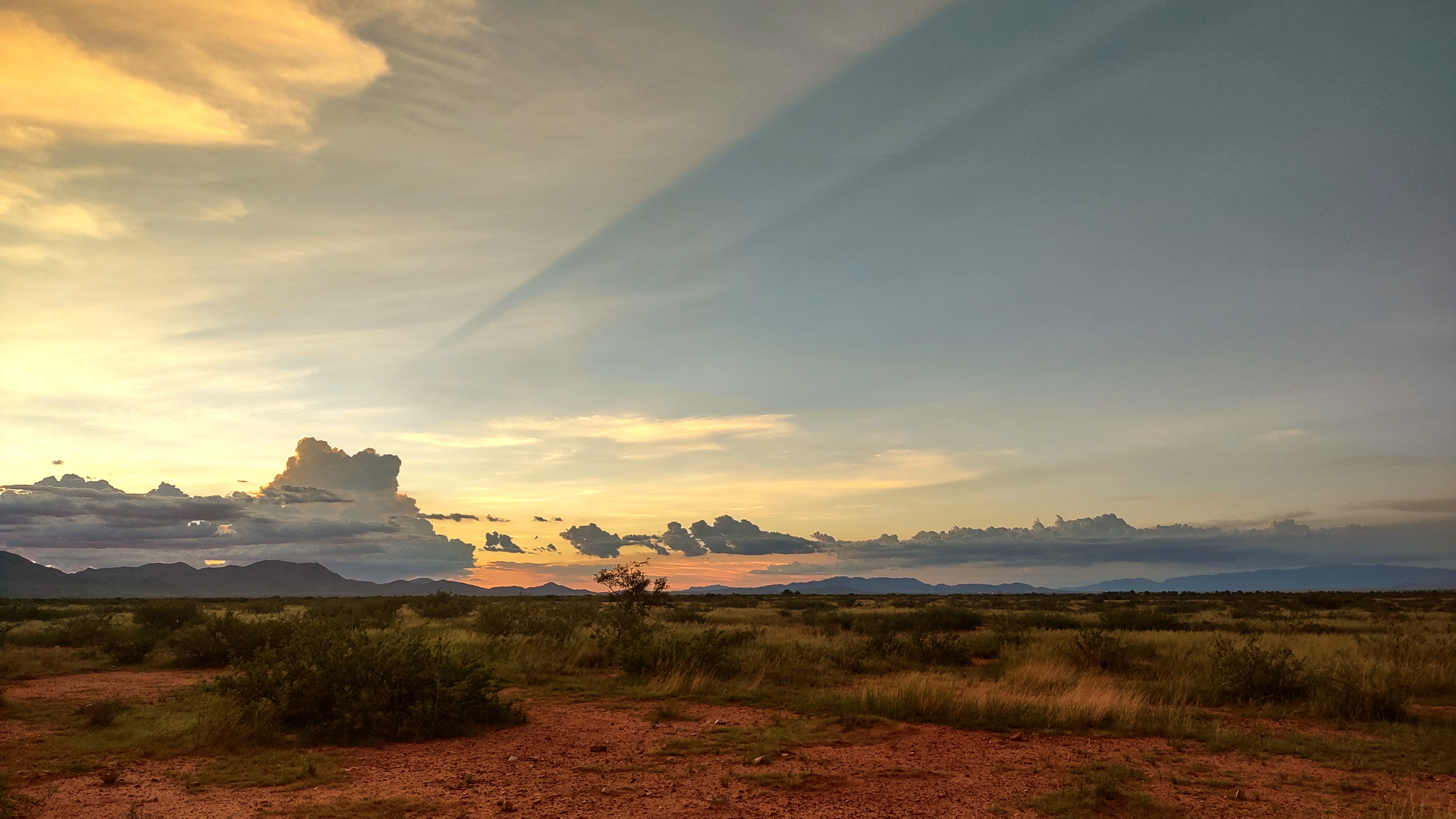
 Litany_of_the_Lost
